



導(dǎo)讀
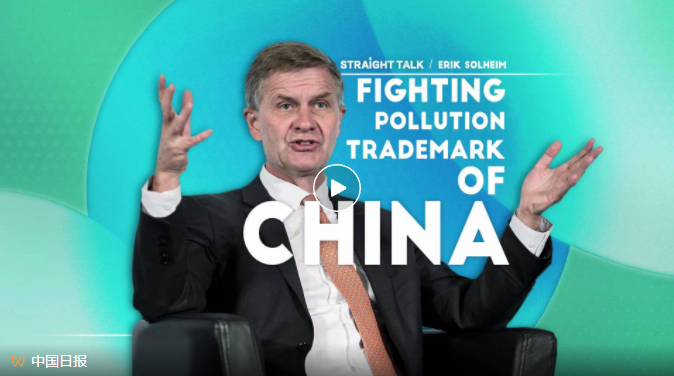
聯(lián)合國環(huán)境署 (UNEP) 前執(zhí)行主任、挪威前環(huán)境和國際發(fā)展部長埃里克·索爾海姆 (Erik Solheim) 10月17日作客中國日報社推出的訪談節(jié)目《連線·全球政要看中國十年》。他表示,中共二十大報告反映出中國對氣候環(huán)境問題高度關(guān)注,過去十年中國在這方面成績斐然,已成為全球新能源和綠色產(chǎn)業(yè)的引領(lǐng)者。對此,世界其他國家應(yīng)客觀看待。綠色轉(zhuǎn)型不僅將助力中國實(shí)現(xiàn)“彎道超車”,也證明生態(tài)和經(jīng)濟(jì)完全可以兼顧。
“美麗中國”正從圖景變?yōu)楝F(xiàn)實(shí)
索爾海姆說,改革開放的頭三十年里,中國以經(jīng)濟(jì)建設(shè)為中心,致力于實(shí)現(xiàn)全面脫貧。中國在脫貧攻堅(jiān)方面卓有成效,但并非沒有代價,這個代價就是嚴(yán)重污染。于是中國需要思變求變,即進(jìn)行產(chǎn)業(yè)結(jié)構(gòu)調(diào)整。這意味著必須大力減少污染,轉(zhuǎn)移污染產(chǎn)業(yè),降低污染行業(yè)造成的危害。
In the first three decades of opening-up, China prioritized economic growth above everything else to bring everyone out of poverty. China had fantastic success in that, never ever in human history. But there was a cost. The cost was heavy pollution and you needed to change this. That is, of course, to restructure industries, meaning that there must be much less polluting, and restructuring them in the way that they may move to some other places where the harm is less.
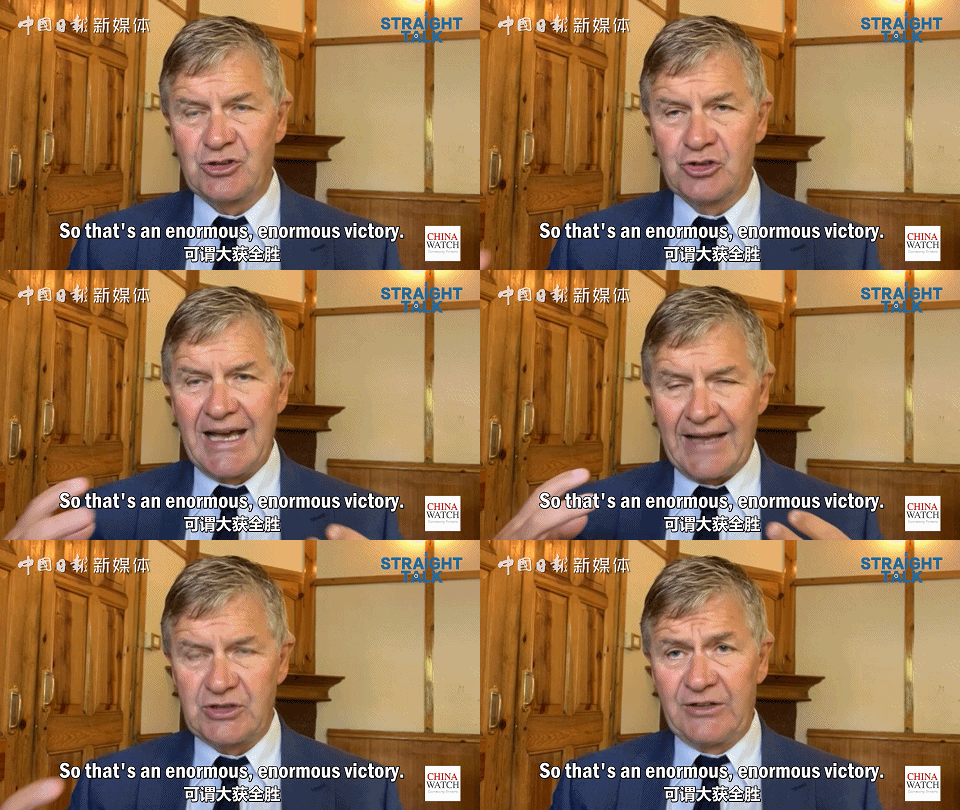
過去十年間,中國在污染防治方面取得的成就超過西方三四十年的成就,可謂大獲全勝。中國在各領(lǐng)域不斷完善環(huán)境保護(hù)制度,值得全世界稱贊,比如長江流域全面禁漁。再比如說,我們已然能從一些城市上看到美麗中國的樣子,深圳、杭州、蘇州就堪為典范。這方面的例子不勝枚舉。在建設(shè)美麗中國的過程中,中國人民更加關(guān)愛自然,更謙卑地對待自然,我認(rèn)為這非常好。
In one decade, China achieved more fighting pollution than the West has done in three or four decades. That’s of course an enormous, enormous victory. China has established some systems for caring better for environment everywhere, which are commendable from the entire world. The fishing ban in the Yangtze upper and lower river valleys, one example. The way some Chinese cities like Shenzhen, Hangzhou, Suzhou has developed their beauty, are now the example. There're so many examples of this. I think it's great to mobilize the Chinese people to take better care of nature and to be more humble in nature.
民心所向就是中國共產(chǎn)黨的工作方向
索爾海姆認(rèn)為,治污和反腐是中國這十年的兩大注腳,很大程度上是因?yàn)樗鼈兪敲裥乃颉?/p>
Fighting pollution and corruption have been two of the trademarks of China in the last decade, very largely because there's such big public support for these campaigns.
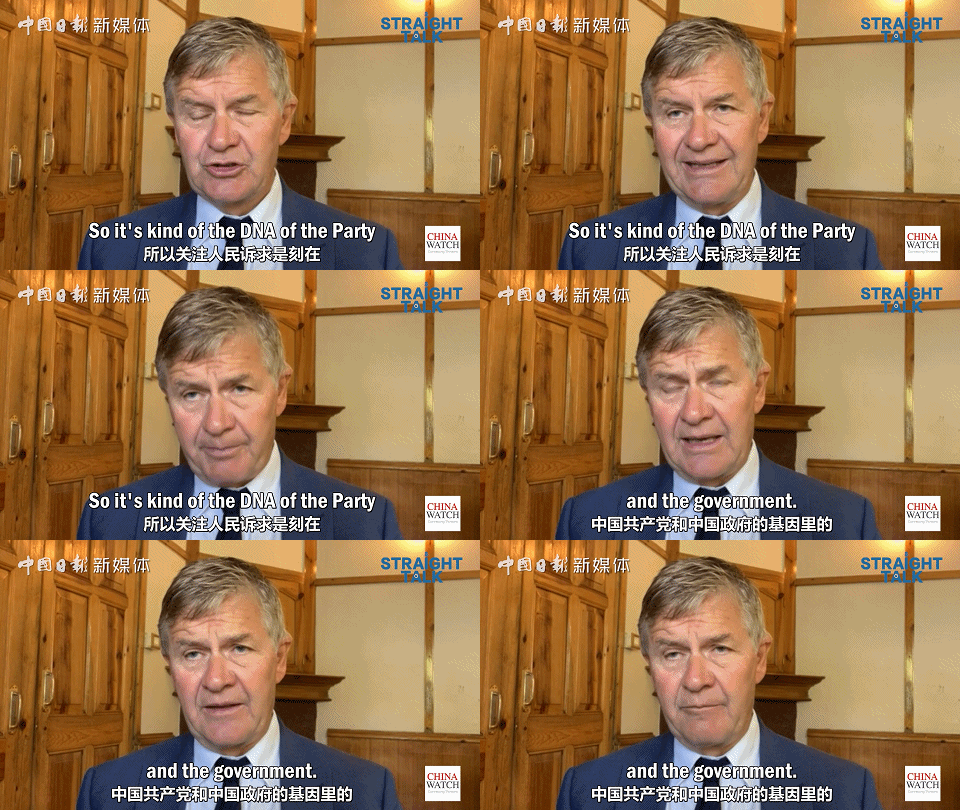
中國共產(chǎn)黨成為中國的執(zhí)政黨,是人民的選擇,關(guān)注人民訴求是刻在中國共產(chǎn)黨和中國政府的基因里的。另一方面,政府希望不負(fù)人民的支持,而中國人民確實(shí)希望在環(huán)保領(lǐng)域看到變化。在我看來也是這樣。政府理解人民的訴求,于是開始采取行動。
The CPC came to power in China because at the end they've got the support from most people in China. So, it's kind of the DNA of the Party and the government. But it's also because the government wants the support of the people, and the people of China would really want to see change in this area. That was true from my perspective. The government understood that demand from the people, and started acting.
同樣地,反腐也是刻在中國共產(chǎn)黨的基因里的,也是中國人民的強(qiáng)烈訴求。人民不希望看到政商界領(lǐng)袖成為自己國家的“蛀蟲”。
Very similarly, the campaign against corruption is part of the DNA of the Party, but also a strong demand from the Chinese people: “We don't want to see leaders in business of politics stealing from our country or eating from the cake.”
中國已成為全球綠色行業(yè)領(lǐng)軍者
在索爾海姆看來,西方媒體大多數(shù)時候?qū)χ袊目捶ㄟ^于負(fù)面,這會導(dǎo)致西方國家對于真實(shí)發(fā)生的情況一無所知。現(xiàn)實(shí)是:如果歐美想在一切可再生能源領(lǐng)域和新興環(huán)境產(chǎn)業(yè)上與中國競爭,就必須得“笨鳥先飛”。目前中國在所有的環(huán)保相關(guān)行業(yè)都處于領(lǐng)先地位。去年,中國生產(chǎn)了全球82%的太陽能電池板、70%的動力電池。你要是買一輛美國電動汽車,沒錯,它可能是在加州組裝的,但它的電池是中國制造的,而電池的成本就占了整輛車的一半。
Largely the view put forward in Western media is far too negative on China. And that makes a very big problem for Western nations, because they don't understand what's happening. A reality now is that Europe and North America need to get up very, very early in the morning, if you want to compete with China in all the renewable energies and all the environment industries which are now coming up. China's now world-leading in every environmental industry: 82 percent of all solar panels in the world were made in China last year; 70 percent of all electric batteries were made in China. If you buy an American car, yes, it's constructed maybe in California, but the battery is made in China and the battery is half the value of the car.
中國企業(yè)的實(shí)力也不容小覷。而歐美國家卻對此渾然不覺。未來中國將席卷所有市場,而如果我們對中國目前在環(huán)保產(chǎn)業(yè)幾乎全面領(lǐng)先的現(xiàn)狀一無所知,那么我們將落得滿盤皆輸。
There are so many Chinese companies now leading the charts. Frankly, Europe and North America are not understanding this. China will capture all these markets, and we will lose out in the competition if we do not understand how advanced China now is in basically every environment industry.
生態(tài)與經(jīng)濟(jì)兼顧是中國新發(fā)展邏輯
索爾海姆指出,在過去,要發(fā)展就要產(chǎn)生污染,就要對自然環(huán)境造成破壞。不論在哪,煤炭能源都是實(shí)現(xiàn)經(jīng)濟(jì)繁榮最便宜的方式。
In the past, there was no way to development without pollution and without some destruction to nature. Coal was everywhere the cheapest way to get into prosperity.
但21世紀(jì)這個邏輯就不適用了,因?yàn)楝F(xiàn)在世界上最便宜的能源是太陽能。實(shí)現(xiàn)從煤炭到太陽能的轉(zhuǎn)變,不僅意味著造福地球母親,增進(jìn)人類健康福祉,也意味著實(shí)現(xiàn)經(jīng)濟(jì)發(fā)展的提質(zhì)增效,因?yàn)樗軌騽?chuàng)造更多就業(yè)機(jī)會,節(jié)省公共資金預(yù)算。中國的石油天然氣嚴(yán)重依賴進(jìn)口,但若能代之以太陽能或風(fēng)能發(fā)電,不僅對地球母親來說是件好事,也對國家財政極其有利,因?yàn)橹袊梢詫⑹∠碌腻X用于教育和醫(yī)療。
The 21st century is very, very different, because solar energy is now the cheapest energy everywhere in the world. If you switch from coal to solar, not only do you do much more for Mother Earth and for people's health, but you also do much more for the economy. You create many, many more jobs. You save money on public budgets, see the case of China, and nearly all oil and gas is imported. If China can replace that with electricity produced by solar or wind in China, it’s good for Mother Earth, but it's also very, very good for the state budget of China, which can then use this money on education and health.
此外,能源轉(zhuǎn)型對中國來說尤為重要的另一個原因在于,中國是個后發(fā)國家,汽車等傳統(tǒng)工業(yè)基礎(chǔ)薄弱,因此中國在上世紀(jì)高污染行業(yè)的競爭中落了下風(fēng)。但對中國來說,在未來實(shí)現(xiàn)跨越式發(fā)展,引領(lǐng)電動汽車產(chǎn)業(yè),就容易得多。如今,中國占據(jù)了全球電動汽車行業(yè)的半壁江山,全球98%的電動公交車都在中國的道路上行駛,真是不可思議。所以,摒棄那些破壞地球才能發(fā)展經(jīng)濟(jì)的陳舊觀念吧,未來是雙贏的,生態(tài)保護(hù)和經(jīng)濟(jì)發(fā)展完全可以兼顧。
And of course, for China, this was also particularly important because China didn't have, say, a major automobile industry. So, it was hard for China to compete in the old 20th century polluting industries, but it's much easier for China to leapfrog into the future, and to be a dominant player in the electric mobility industry. Now you see China's 50 percent of the market for electric cars in the world, and incredibly 98 percent of all electric buses on Planet Earth are running on Chinese roads. So, let's forget this old idea that we need to destroy the planet to have economic progress. The future is win-win, good for ecology and good for economy at the same time.
↓ 點(diǎn)擊觀看視頻 ↓
出品人:王浩 劉偉玲
監(jiān)制:柯榮誼 宋平
制片:張少偉
記者:沈一鳴 張欣然 劉源 張釗 欒瑞英 劉夏
實(shí)習(xí)生: 袁嘉憶 王博麟
中國觀察智庫
中國日報新媒體中心
聯(lián)合出品
















































 掃碼下載
掃碼下載 中文網(wǎng)微信