9月11日,美國主流媒體彭博社(Bloomberg)刊登了一篇標題為《中國如何應對變化中的美國?》(How Should China Respond to a Changing U.S.?)的署名文章,引起了國外各界的廣泛關注。
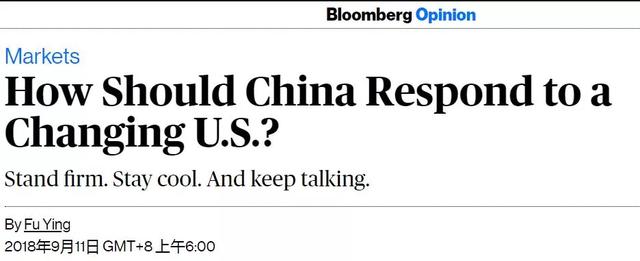
△彭博社報道截圖
該文章摘編自傅瑩——全國人民代表大會外事委員會副主任委員、中國社科院全球戰略智庫首席專家——2018年8月28-29日在亞洲協會等機構的演講《中美今天的選擇決定未來兩國關系》。
文中傅瑩對當下中美關系、美國對華態度發表了如下看法:
1【美國對中國的態度發生變化】
傅瑩在文章中談到,她在最近訪美期間,發現美國人對華態度變了。美國學者普遍認為,“在美國幫助中國加入世貿組織、實現經濟騰飛之后,中國沒有按照美國期待的方式發展,美方對此感到失望。相反,在與中國的經貿交往中,中國占了美國的便宜,美國更擔心中國在全球經濟和技術階梯上的快速提升。美方還認為在軍事上受到被中國‘擠出’亞洲的威脅。”
The U.S. was frustrated at not having shaped China in its own image, despite bringing the country into the World Trade Organization and helping to enable its economic takeoff. Instead, China had “ripped off” the U.S. by taking advantage of it in trade and business. There was concern at how fast China was climbing up the global economic and technological ladder, and that its military was threatening to “elbow out” the U.S. from Asia.
2【如何改善中美關系】
傅瑩認為,首先中國應該思考一個問題:美國的指責是否公允?
……the Chinese people first have to ask whether U.S. criticisms are fair.
中國的確沒有隨著經濟增長而接受美國的政治制度。然而,“在見證了“顏色革命”和“阿拉伯之春”給一些國家帶來的后果之后,美國應該慶幸,中國并沒有走上政治動蕩或經濟混亂的歧途,而是保持總體社會穩定,成功走出一條符合自身國情的經濟發展道路,為全球經濟做出了貢獻。”
In fact, given what’s happened to some countries since the “color revolutions” and the “Arab Spring,” the U.S. should be thankful that its efforts haven’t thrown China into political turmoil and economic chaos. The fact that China has maintained social and political stability and followed its own economic path has contributed to global economic growth.
中國經濟的快速發展的確是充分利用了美歐推動的全球化帶來的機遇。勤勞的中國人有效使用了國際資金、技術、經驗和市場,促進了工業化進程。數以億計的中國人民擺脫了貧困,人民生活水平取得巨大提升。
True, China’s fortunes have risen as well. Taking advantage of the globalization promoted by the U.S. and Europe, hardworking Chinese gained access to global capital, technologies, expertise and markets, all of which facilitated the growth of industry. Hundreds of millions of Chinese came out of poverty, and living standards in the country have risen substantially.
3【中國在全球化過程中的角色】
不可否認的有兩點:首先,中國的工人在發展的過程中也承受了巨大的代價,在加入WTO以后,國內企業突然直接面對國際競爭,多數產業陷入困難,有的甚至難以為繼,大量工人下崗。
After entering the World Trade Organization, Chinese enterprises were suddenly thrown into direct competition with global peers. Many of them didn’t survive, leading to huge layoffs all over the country.
此外,中國的發展同樣惠及美國。牛津研究院估計,從中國進口的低價商品幫助普通美國家庭平均每年節省850美元。從2001年到2016 年,美國貨物貿易對華出口增長500%,遠高于同期對全球出口90%的增幅。萬物聯網時代的到來和中國快速增長的中高收入消費者群體的出現,將為美國公司提供更多機會。
China’s gains have benefited the U.S. as well. According to Oxford Economics, U.S.-China trade helps each American family save $850 every year. Between 2001 and 2016, U.S. commodities exports to China expanded five times, much higher than the 90 percent average increase. The advent of the “internet of things” and rapid growth in the number of China’s middle- and upper-class consumers will offer even more opportunities for U.S. companies.
因此,面對變化中的美國,面對美國的強硬但混亂的聲音,傅瑩認為,我們需要保持淡定,重要的是聚焦自身發展,解決好自己的問題。
The Chinese have to stay cool-headed in the face of tough but confusing messages from the U.S. We must stay focused on China’s development, and overcome our own difficulties.
4【中國對美國態度如何】
傅瑩表示,中國沒有對美采取更加對抗的態度。因為,中國對美政策是整體外交政策的組成部分,而中國外交政策的目標是維護一個和平的外部環境和合作的國際關系, 以服務于國家的發展。
China is not adopting a more confrontational stance toward the U.S. Its current attitude is part of its overall foreign policy, which is aimed at ensuring a sound environment that facilitates effective cooperation with the outside world to serve China’s development goals.
5【中國如何應對中美貿易摩擦】
傅瑩坦陳,中美關系的變局對中國也是又一次倒逼改革的機會。中國政府正在進一步推進開放:國家主席習近平今年四月宣布的11項開發市場的具體承諾,迄已落實8項,涉及銀行、證券、保險、評級、征信、支付等。政府也在下大力氣改善營商環境,加強對中外企業知識產權的保護。中國的改革者可以將外部壓力轉化為動力,打破阻力、實現必要的改革成效。
In fact, changes in U.S.-China relations may help to push China’s own desired reforms. The government is, in fact, opening up: Eight out of the 11 market-opening measures announced by President Xi Jinping in April have been put in place, covering banking, securities, insurance, credit rating, credit investigation and payment, and so on. The government is also working harder to improve the business environment and strengthen intellectual property protections for both Chinese and foreign enterprises. Chinese reformers can turn outside pressure to their advantage, using it to bust through internal resistance to necessary changes.
但有一點必須清楚:中方絕不會屈服于關稅霸凌。有些言論聲稱貿易戰使中國經濟“滑坡”,還有人認為可以期待中國屈服了。這只是一廂情愿。
But make no mistake: The Chinese people will stand firm against U.S. bullying over trade. There is talk about China’s economy “sliding down” as a result of the trade war. Some expect China to succumb soon. I can tell you that this is wishful thinking.
傅瑩在文章結尾處表示,“中國應繼續與美方溝通。……中方有責任堅持對話,逐步澄清雙方的一致點和分歧點,以拆解矛盾和解決問題、抑或管理難題的方式,渡過中美關系的險灘激流。”
But that doesn’t relieve China of the responsibility to engage in dialogue, to find out where the two sides can and can’t agree, and to seek solutions or at least ways to manage persistent disputes.
最后,傅瑩引用了一個俚語,說明中國仍然會堅持主張,繼續保持對話合作。“當然,那些一心尋求對抗的人或許不會對這個途徑感興趣。但是——讓我借用一個俚語——如果有些人想追逐蝴蝶,其他人為什么要隨之起舞呢?”
Such an approach won’t appeal to those who seek confrontation now. But, to borrow a saying, if some folks want to chase butterflies, why should the rest of us go dancing along with them?
傅瑩的文章闡明了中國對待中美貿易摩擦的態度以及對中美關系未來走勢的看法,然而,她的觀點并非一家之言,此前,許多外媒的報道也印證了中方對中美貿易摩擦持有的一貫態度。
【美國貿易戰不只針對經濟】
《南華早報》在8月19日發表題為《不只關稅:中國將貿易戰視為美國新的牽制政策》。
文章稱,作為延緩中國經濟和科技崛起的眾多戰略之一,貿易戰與美國近期的其他舉動,都是為了制約中國的國際影響力。
As part of a wider strategy to slow China’s economic and technological rise, the trade war joins other recent moves by the US to rein in China’s global influence.
【特朗普搬起石頭砸自己的腳】
洛杉磯時報4月5日的報道《特朗普的貿易戰不會達成他的目的,反而會傷害美國的工人和消費者》表明,特朗普的政策只會搬起石頭砸自己的腳。
正如傅瑩所說,“中國的發展惠及美國”,打擊中國貿易,則會殃及池魚。該報道稱,特朗普的政策將損害制造業、農業以及投資領域。
經濟領域風險最大的是美國的制造業……以及農業,中西部的豆農以及加州的堅果種植主,都將面臨國外市場的巨大損失。
The economic sectors most at risk are American manufacturing,……and agriculture, where growers of soybeans in the Midwest and nuts in California face the loss of significant foreign markets.
特朗普的政策還會損害中國投資流入美國,受此威脅尤為嚴重的是加州,因為中國對美國直接投資的四分之一都流向了加州。
Trump's policies also threaten the flow of Chinese investment into the U.S.; that's a particular threat to California, which has been the destination for one-fourth of all Chinese direct investment in the U.S.
《南華早報》6月22日的報道《特朗普的貿易戰中,美國企業受傷首當其沖》。
美國的彼得森國際經濟研究所研究院Mary Lovely和Yang Liang在一份研究中表示,“特朗普301條款的關稅政策是商業目標,但它對美國自身利益的損害遠高于對它的預期目標。”
“President Trump’s Section 301 tariffs are a commercial own goal in that they harm American interests more than their intended targets.”
【中國在自我改革】
傅瑩在文章中說,貿易戰倒逼中國的改革,同時,中國應自身做大做強。《外交學者》雜志網站發表的一篇評論文章《美中貿易摩擦的更大威脅》稱,中國正在積極降低對貿易的依賴。
中國正在持續地、成功地降低對貿易的依賴:出口總量占GDP的比重已經從2007年的超過30%下降到去年的不到20%;同時,對美國的出口也從近9%下降到4%。
But China has been making a concerted, successful push to reduce its dependence on trade: the share of total exports in its gross domestic product fell from over 30 percent in 2007 to under 20 percent last year; during that same time, the share of exports to the United States fell from approximately 9 percent of China's economy to just over 4 percent.
CNBC在9月10的報道《特朗普針對中國的貿易戰會引發“反常行動”,CLSA經濟學家稱》
文章引用里昂證券首席經濟學家Eric Fishwick的觀點,稱“(貿易戰)可能會引發反常行動,使得中國增加供給……變得越來越自給自足,生產越來越多高科技產品。這肯定會鼓勵中國采取更多措施加強其政治和經濟影響力。”
"It may well have the perverse reaction of accelerating China's attempts to move up the supply curve ... to become self-sufficient (in) more and more high-tech products. And it will certainly encourage China in its moves to build more and more political and economic spheres of influence,"
此外,他還談到,在經濟發展方面,中國一直致力于向高科技產業邁進,其“中國制造2025”計劃旨在夯實、提高機器人和電動汽車等領域的制造業實力。
On the economic development front, China has been on a mission to move toward high-tech industries, with its Made in China 2025 plan seeking to establish manufacturing strength in areas such as robotics and electric vehicles.
【中國無心戀戰,貿易戰無法挫傷中國發展】
《華盛頓郵報》9月7日的文章《特朗普威脅對價值2670億美元的中國商品征收關稅,將貿易戰擴大到中國進口美國的所有商品》表示,中國并無意擴大貿易戰。
文章引用康奈爾大學經濟學家、IMF中國區前總裁Eswar Prasad的觀點,稱“特朗普的言論表明他想要升級貿易戰直到中國認輸的意圖,但是中國也明確表明,無意這樣做。”
Cornell University economist Eswar Prasad, former head of the International Monetary Fund's China division. "Trump’s remarks confirm his intention to continue escalating trade sanctions until China capitulates, and China has equally clearly signaled it has no intention of doing so."
對于貿易戰影響中國經濟發展的觀點,美聯社的報道也呼應了傅瑩的觀點。“這只是一廂情愿”。
AP在9月11日的文章《如果美國增加關稅,中國則會反擊》稱,“7月和8月,盡管美國關稅增加,但中國對美國的出口貿易出其不意地呈現兩位數增長。這也許會增加美國的挫敗感,促使他們增加進口管制。”
China's exports to the United States have been unexpectedly resilient, rising by double digits in July and August despite the US tariff hikes. That might add to Washington's frustration and prompt more import controls.
編輯:胡雨濛
實習生:朱晨、徐夢姍、尹易